Proof in practice

Case Studies

Real stories of young adults, children, and families building practical skills, working solutions, and confidence with artificial intelligence.

Featured Workforce Development Case Study

The generation building tomorrow's economy today.

By Denise Smith · September 9, 2025

In 2025, AI InnoVision, in partnership with WrightNow Solutions and Westside Works, guided young adults ages 18 to 24 through a nine-week, 60-hour accredited AI certification program. Participants did not simply learn about AI. They built working solutions for education, content creation, small business, sustainability, and cybersecurity.

Their work shows what becomes possible when practical training meets talent and access. It is the kind of pathway the foundation is committed to expanding for communities ready to participate in the economy being built around them.

Read the Full Case Study
  • 220K+

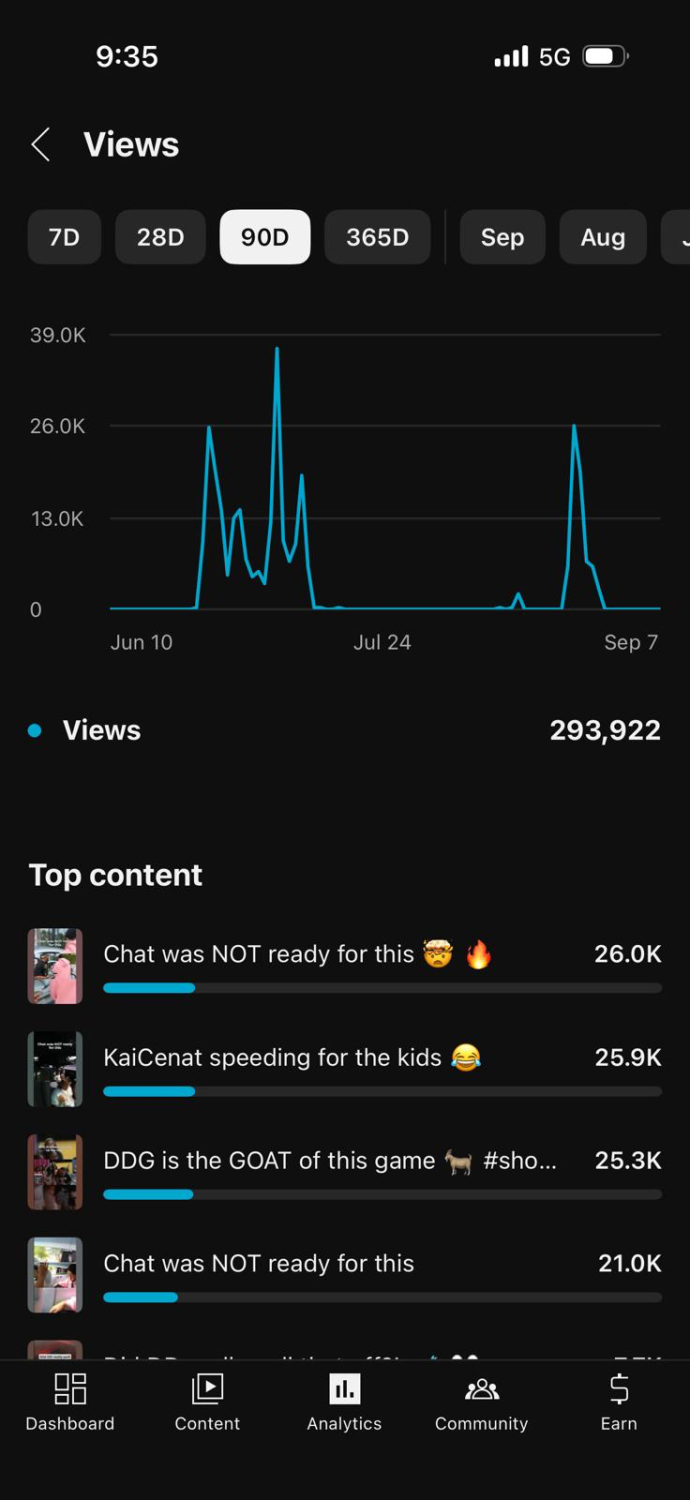
    views generated by an AI content system in two weeks

  • 8 hours

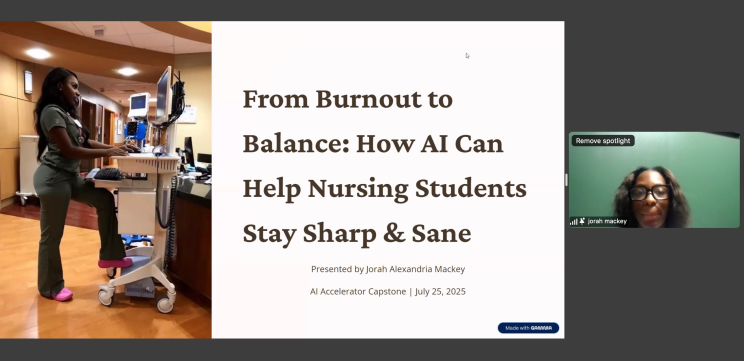
    saved each week by a nursing study tool

  • Small business

    automation designed for Atlanta entrepreneurs

  • Real time

    AI threat detection built for cybersecurity response

Analytics showing more than 220,000 views generated by a participant's AI content system
Ahdjogo Mahnassi's AI content system generated more than 220,000 views in two weeks.
Jorah Mackey presenting an AI solution for nursing student burnout during an online session
Jorah Mackey presented a nursing study tool designed to save students eight hours each week.
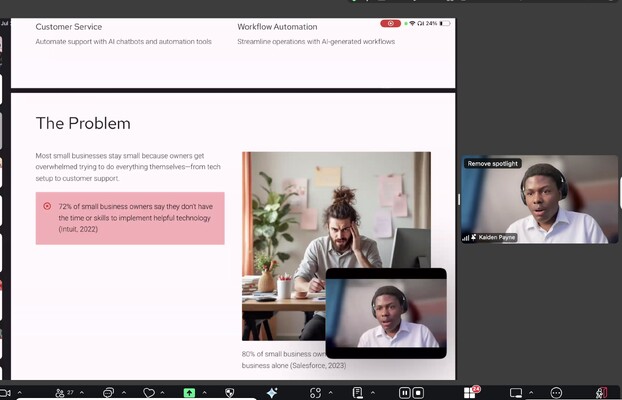
Kaiden Payne presenting an AI automation suite for Atlanta small businesses
Kaiden Payne built AI-powered websites, customer support, and marketing tools for small businesses.
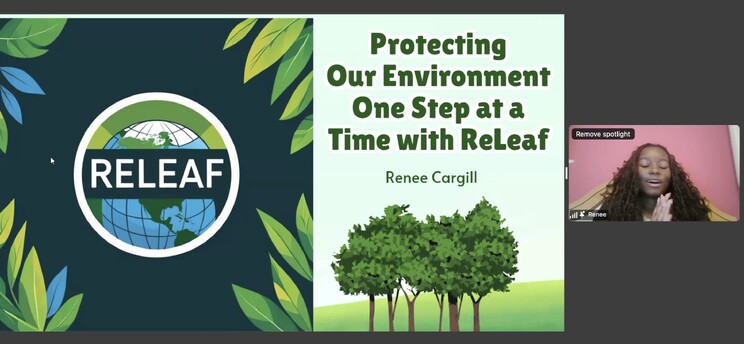
Renee Cargill presenting ReLeaf, an AI environmental companion
Renee Cargill introduced ReLeaf, an AI companion designed to help households reduce waste.

Photography and project images originally published with the LinkedIn case study.

Youth AI Boot Camp

Asking better questions. Imagining bigger futures.

Originally shared by TAG-Ed · July 29, 2026

TAG-Ed summer youth interns explored what is possible with artificial intelligence during a hands-on AI Boot Camp with Katherine Sudduth, Ed.D., an educator at Atlanta Public Schools, and Denise Smith, Chief Innovation Officer at AI InnoVision.

Students practiced writing thoughtful prompts, refining their approach, and testing ideas in real time. Along the way, they strengthened critical thinking and communication skills, grew more confident with emerging technology, and discovered career pathways they may not have known existed.

Early access can spark curiosity. Guided practice can turn that curiosity into confidence and possibility.

View the Original Post
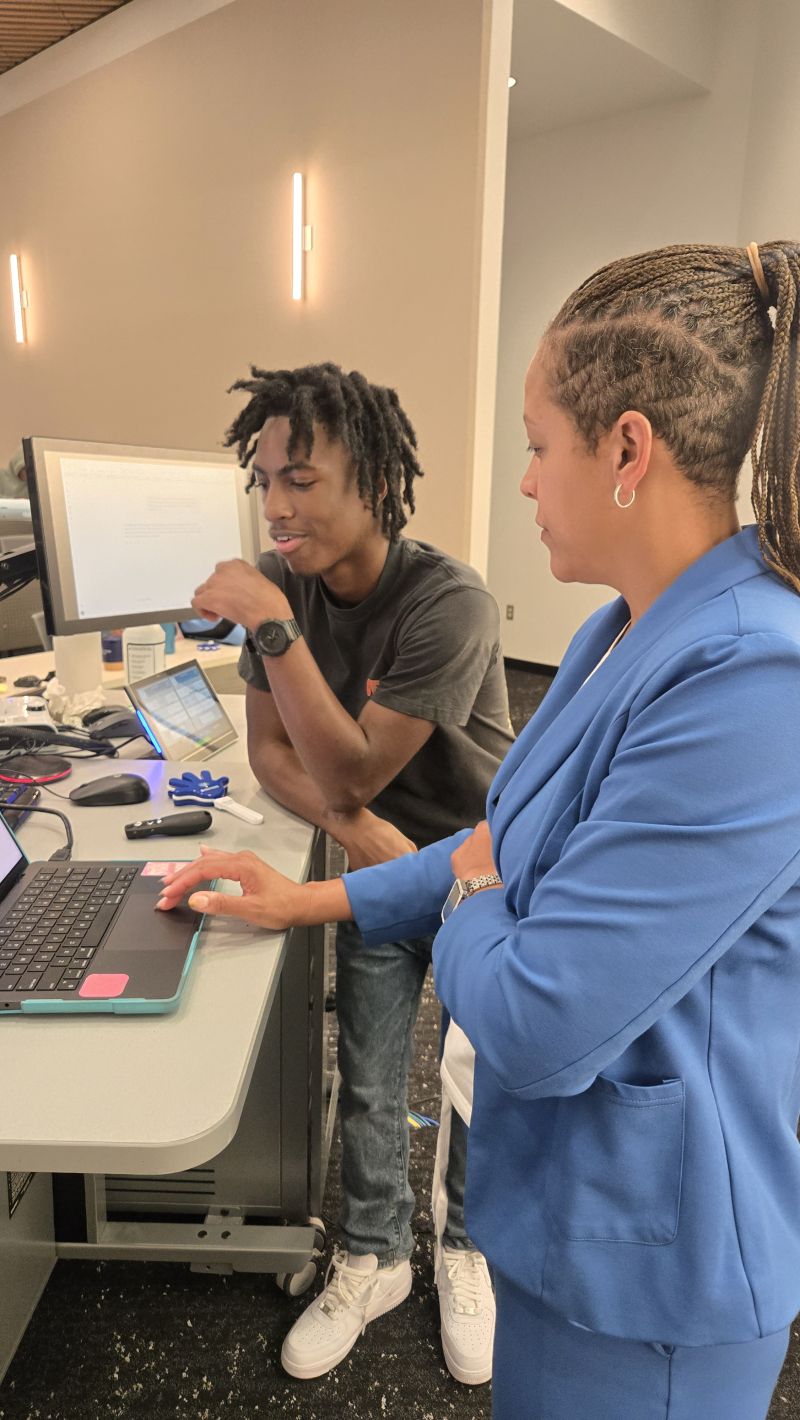
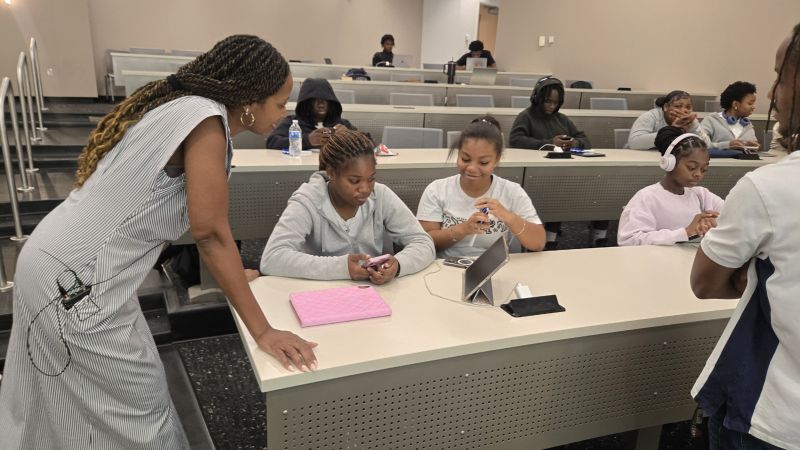
An instructor guiding a youth intern through an exercise on a laptop during the TAG-Ed AI Boot Camp
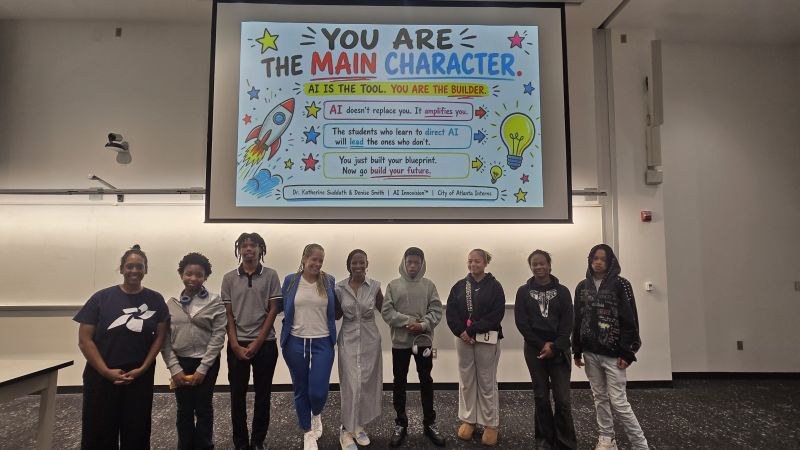
TAG-Ed summer youth interns and instructors standing together after the AI Boot Camp
Youth interns collaborating at classroom tables during the TAG-Ed AI Boot Camp

TAG-Ed summer youth interns participate in hands-on AI learning and guided practice.

"I learned how to animate stuff, and write a story, and I made friends."

A participant, on the closing mic, four hours after saying he had never used AI.

AI Explorers: putting the tools in children's hands

A case study from the Family Edition. The Russell Innovation Center for Entrepreneurs, Atlanta, and live on Zoom. September 20, 2025.

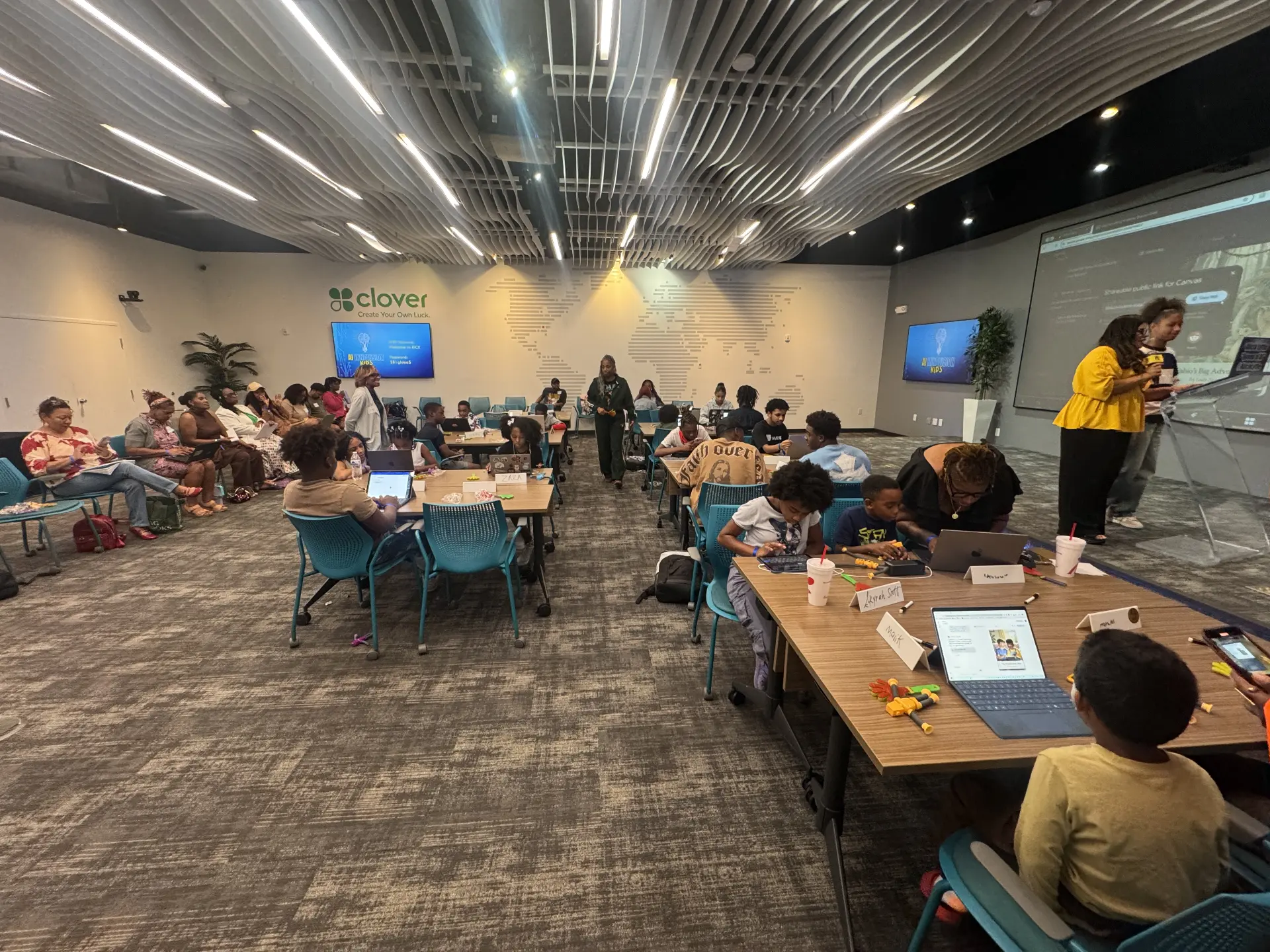
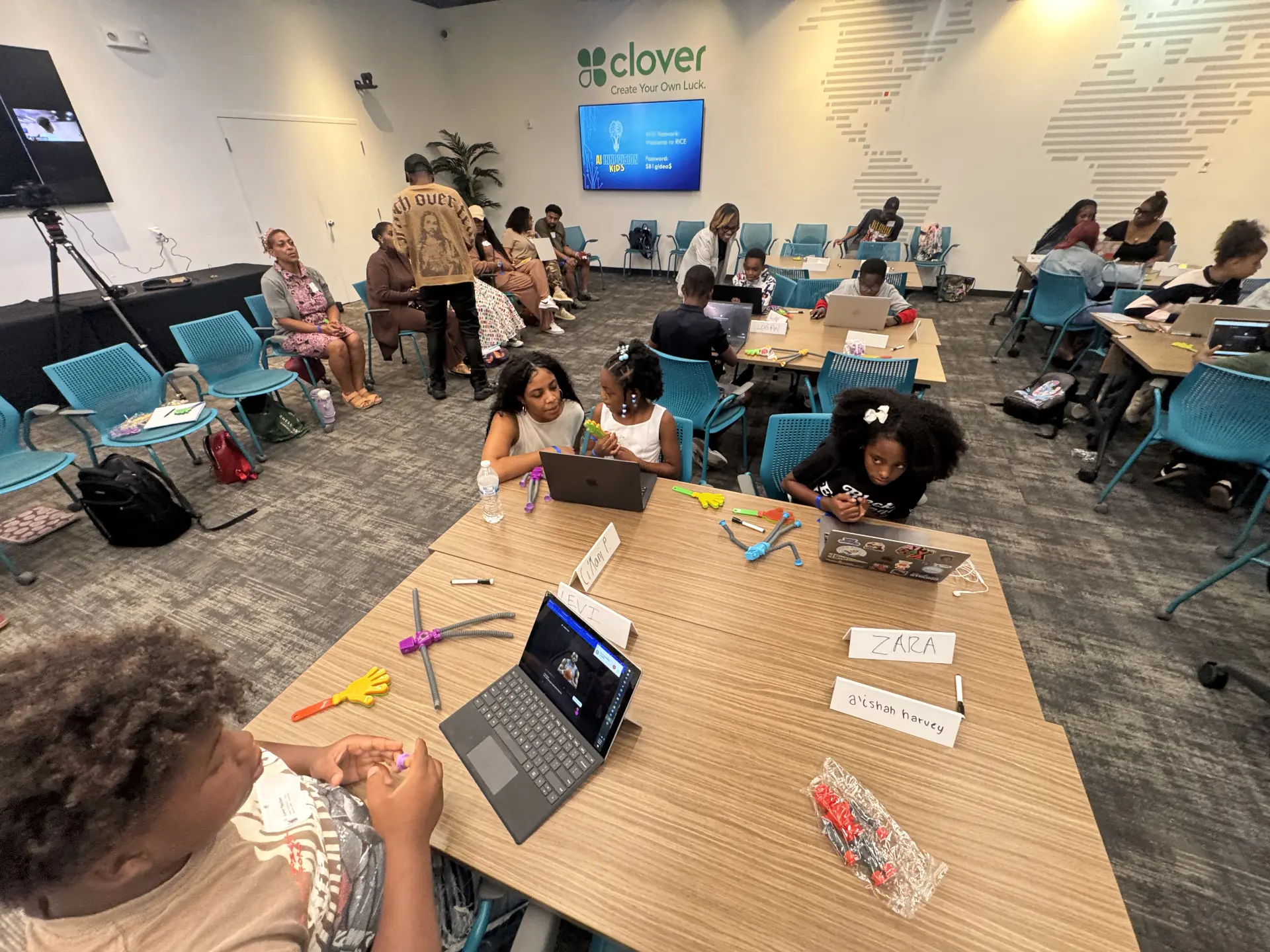
Children and adults seated around workshop tables with laptops beneath a curved illuminated ceiling at the Russell Innovation Center for Entrepreneurs
Thirty-three children spent a Saturday morning building with AI instead of hearing about it.

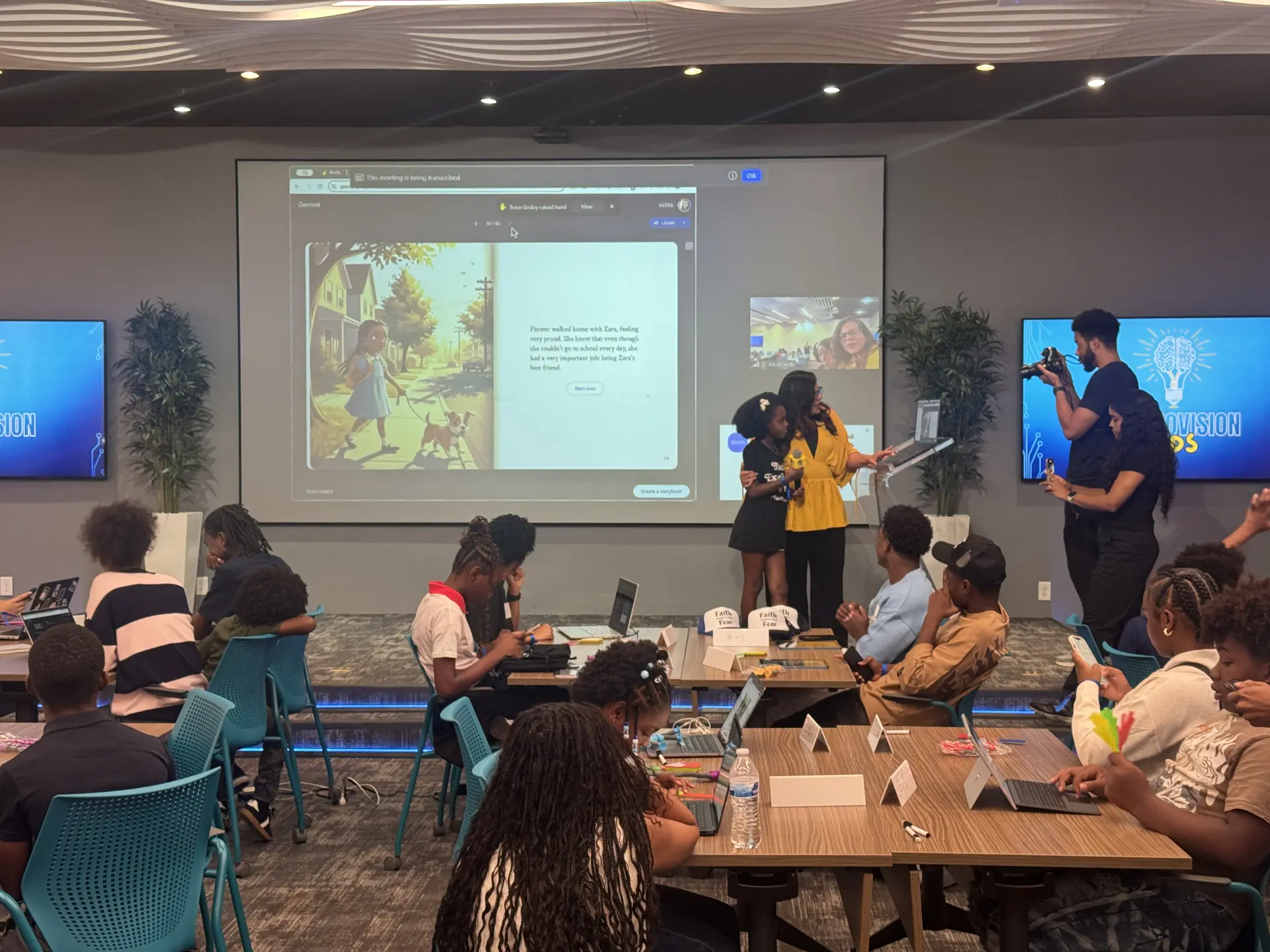
My daughter Zara is nine. When we asked the room what they wanted to make, she made a storybook about our dog Flower following her to school. The last page reads: Flower walked home with Zara, feeling very proud. She knew that even though she couldn't go to school every day, she had a very important job, being Zara's best friend.

Zara did not learn to code that morning. She learned that she could make something, put her name on the cover, and stand in front of a room full of people to explain it.

That is what AI Explorers is for. Not a lecture series about the future of work. A room, a keyboard, four hours, and a child walking out with something they built.

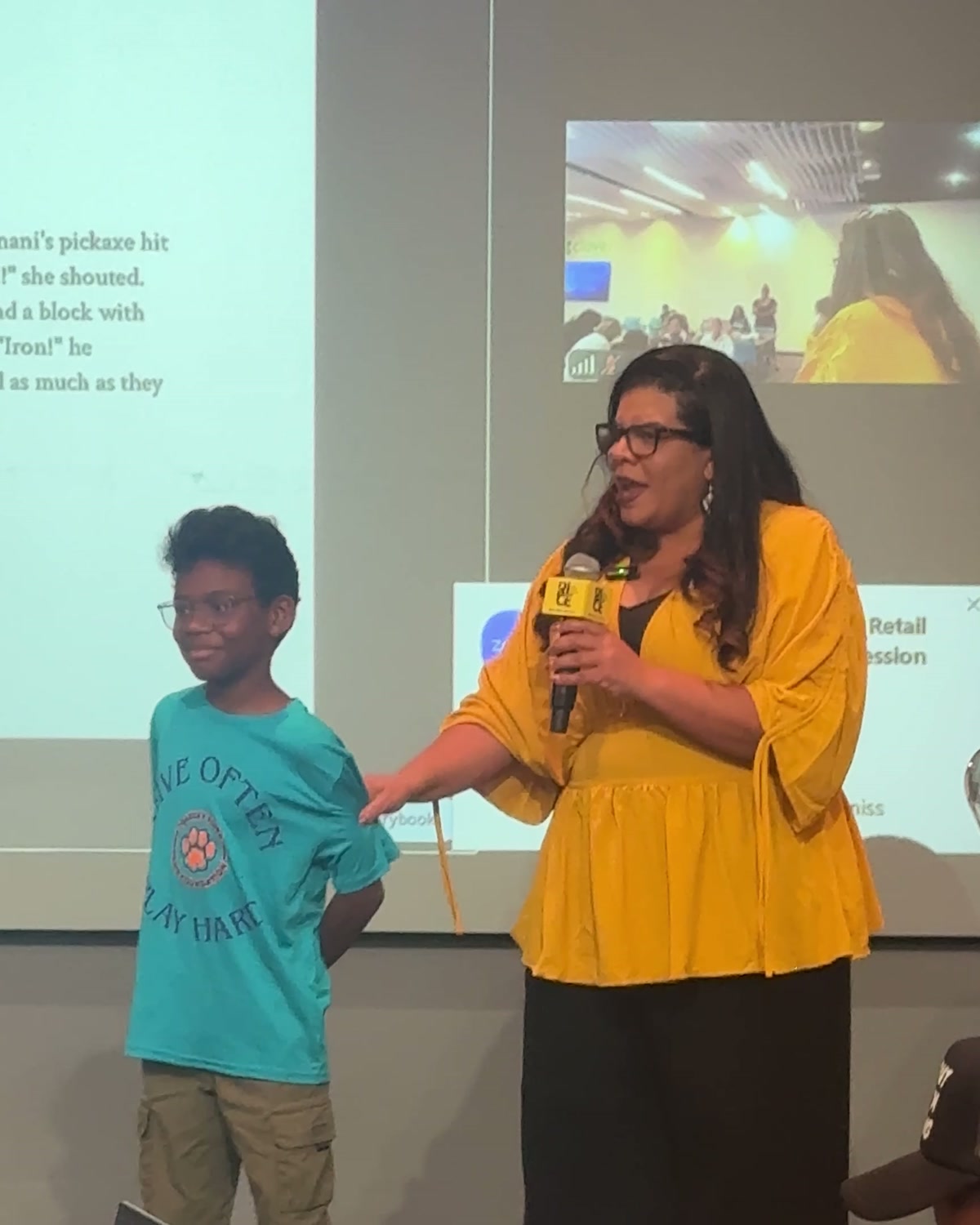
A child speaking into a microphone beside a projected AI-generated storybook page
Every child who finished a project got the microphone and a photo beside their work.
33
children registered for the live room
31
families, including two sets of siblings
5 to 17
age range, median age 10
22
states, plus Canada, joining on Zoom
171
people joined on Zoom, each with a child on with them

Grades pre-K through 12th. Families joined the livestream from Detroit, Chicago, Milwaukee, Omaha, Philadelphia, Oakland, Las Vegas, San Antonio, Memphis and Miami.

Why this initiative exists

Children will inherit this technology whether or not anyone teaches them. The question is who gets to learn it as a tool they control, and who gets to meet it as something that simply happens to them.

Right now that line runs along the same fault lines as every other technology gap. Families with a parent in tech are already at the kitchen table experimenting. Families without one are waiting for a school district to catch up. AI Explorers closes that distance in a single Saturday, using tools that cost nothing so the learning continues on Monday.

We built it for whole families on purpose. The child learns the tool. The parent learns enough to keep the door open at home.

We started with a question, not a lecture

What is artificial intelligence? The first hand up belonged to Magic, who is six. He took the microphone and said AI is "computers doing things amazing." A teenager followed him: it is a quick solution to problems you could not work out on your own. A girl named Kyra said it can come in many different ways, and some of them can be made in real life.

They already knew. What most of them had never had was a keyboard in front of them, permission to use it, and somebody nearby who believed the thing they made would be worth showing.

Ten minutes in, every child in the room and on the call was building.

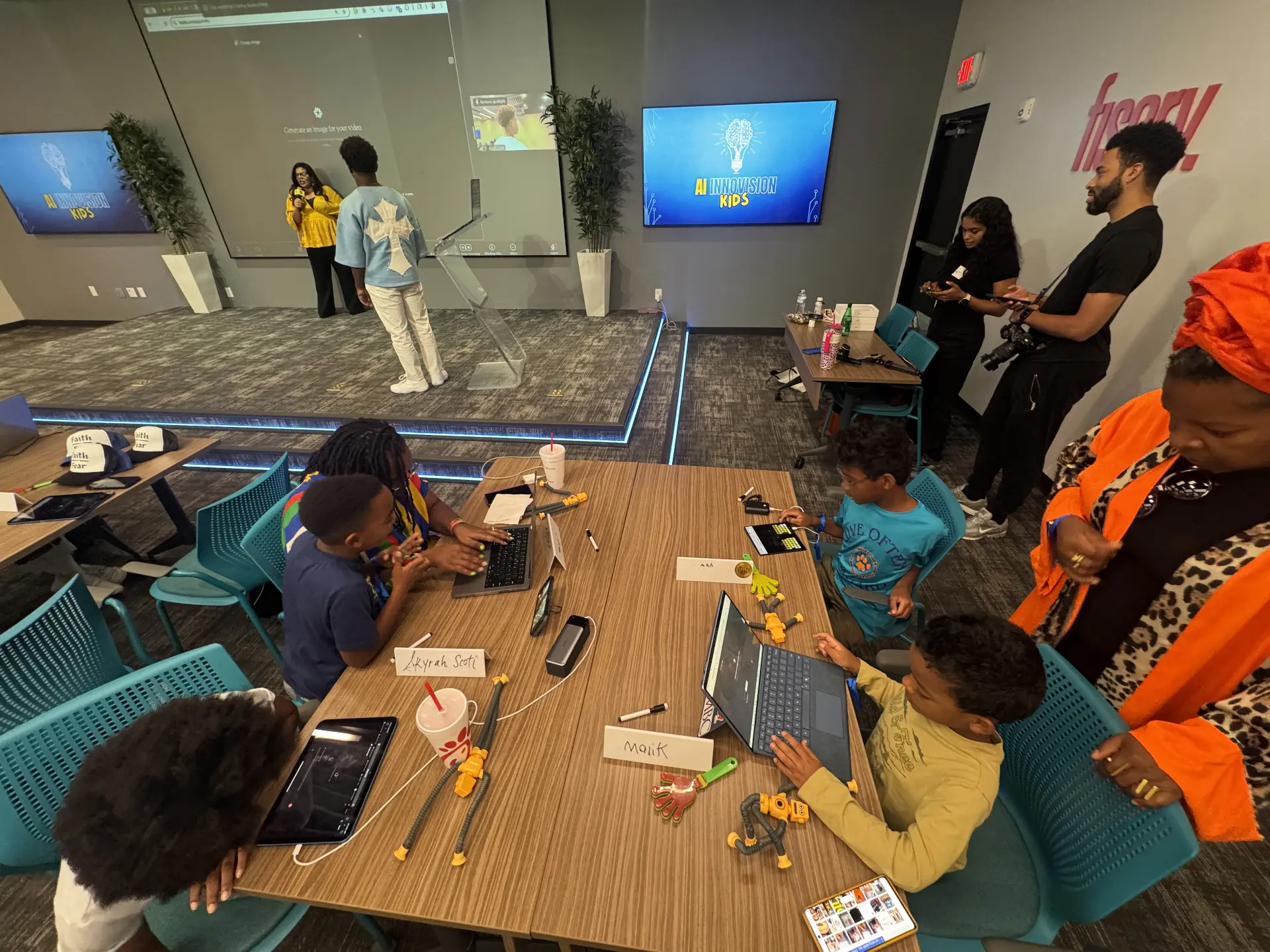
Children concentrating on laptops and tablets around a workshop table while adults assist nearby
Ten minutes in, nobody was watching a demo.

Four things they built before lunch

Station one

A storybook with their name on the cover

Google Gemini, Storybook

Kids typed or spoke what they wanted the story to be about. AI wrote the words, drew every illustration, and read it aloud. Then came the part that mattered most: we taught them to talk back to it. Change the author name. Change the character. Make it ten pages longer. One girl changed the name on the cover to her own in front of the whole room, and you could feel the shift. The tool stopped being magic and started being hers.
Station two

An animated video in their own voice

Hedra

They described a character, generated the image, then chose whether to use an AI voice or record their own. One boy recorded himself shouting "take the ball to the goal, we're gonna win," and watched his soccer player say it back to him. He spent the rest of the session walking the room helping other kids do the same. He made three videos. He was the only one who did.

Station three

An AI employee that works for them

Custom GPT

An eleventh grader built a science tutor. He named it Jack, gave it a face, told it to ask one question at a time, explain every wrong answer, and get him through his midterm. Then he uploaded his own class notes so Jack would teach from them. We asked the room what an hour with a human tutor costs. That is the moment several parents leaned in.

Station four

A lesson in how machines actually learn

Quick, Draw! by Google

Twenty seconds to draw something a computer can guess. Fun, and also the real lesson of the day: every doodle they made becomes training data, kept and learned from. We said it plainly, and we asked the room for a yes before anyone drew. One girl went six for six, took the mic, and explained machine learning to the room herself.

An adult and child working together on a laptop at a table during the AI workshop
Parents were not spectators. Several of them touched AI for the first time that day too.

What they chose to write about

Nobody handed out prompts. Every story below came out of a child's own head, which is why this list is the real outcome data.

Cedric, 16 first time using AI, ever

A door-to-door salesman who gets rejected at every house and never gives up, until everybody wants what he is selling. He told the room, "This is the first story I ever created. I had never even used AI in my life." Then he said he was going to be the king of AI.

Christopher, 14 joined from home

A ninth grader facing his first season of high school baseball, learning that confidence is the key to all of it. He named the main character De Niro, after his own middle name.

Bryce, 16 a story he had carried since fifth grade

"The Unmasked." A boy in a neighborhood where everyone wears a porcelain mask and being seen means danger. He wrote it years ago, in his head, inspired by the horror manga he reads. This was the first time it existed outside of him.

Maura, 14 eighth grade

A quiet fox named Charlie who likes old music and is sure he is weird, until he finds two people who love that exact thing about him.

Malik and his friend Ian ages 7 and 9

Two friends build a game together, everyone loves it, and they end up on a yacht. Both boys put themselves in the story by name.

Andy joined from home

A story about generosity, and giving people what they need. He told us, "This is the first time I used AI to create a storybook, and I think I did very well."

Amara, 4 joined from home

Three princesses, a cruise ship, a swimming pool, and a castle. She narrated the whole thing to the room by herself.

Scott a grownup in the room

He had just lost his dog, Caesar. He made a book about the life and times of Caesar the dog.

A child holding a microphone beside a facilitator while an illustrated storybook page is projected for the workshop audience
Four hours of work, presented by the people who made it.

What they said at the closing mic

"I learned how to animate stuff, and write a story, and I made friends."
"AI can help you not only with your work, but with everyday things."
"You can make the ideas, and sometimes you can even sell the prompts for money."
"I learned how to use AI to do stuff for you when you don't know what to do."

Not one child said the technology was scary. Not one said it was too hard. Several asked when the next one is.

What made it work, and what we would tell anyone copying it

Hybrid by design, not as a backup plan

A full Zoom room ran alongside the live room, with its own host spotlighting kids, pulling their links into the chat, and putting their faces on the big screen so the room could turn around and clap for them. A four-year-old in another state got the same stage as the kids in the front row.

Every single child gets the microphone

Building the thing is half of it. Standing up, explaining what you made, and hearing a room applaud is the other half. That is where the confidence gets built, and confidence is the actual deliverable.

Parents work, they do not watch

Grownups helped with logins, shared phone hotspots when the wifi lagged, and made their own storybooks. The skill goes home with the whole family, not just the child.

Free tools only

Everything we taught runs on a free account and a borrowed device. Nothing we demonstrated becomes unavailable to a family on Monday morning.

Teach the honest version

We told them where the voice comes from. We told them their drawings get kept. We showed them the tool refusing to make a celebrity. Children can hold the full truth about this technology, and they trust you more when you give it to them.

Feed people

Lunch was hot, it was catered, and it was served in the middle of the day by a chef who introduced himself to the kings and queens in the room. Dignity is part of the curriculum.

Where this goes next

The Family Edition was built to be repeated. One day, any device, four free tools, and a room that ends with every child holding a microphone. It travels to schools, districts, churches, community centers and corporate family days without changing shape.

We are raising support to run the next editions and to cover devices, transportation and lunch for the families who need them, so that cost never decides which children get to build.

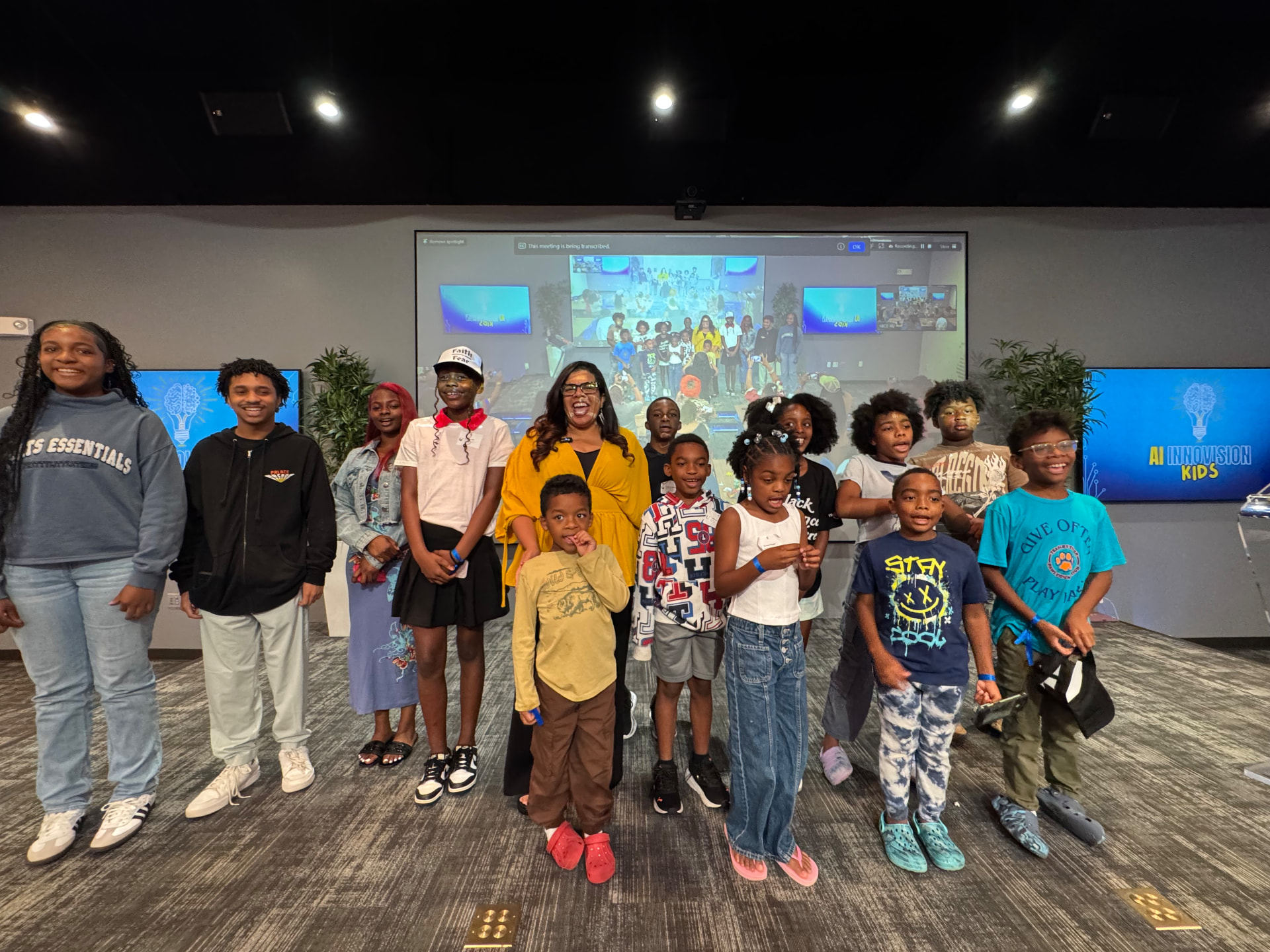
Children and facilitators smiling together in front of screens displaying the AI InnoVision Kids logo
The last thing everyone did together was shout "all in with AI" at the camera.

Bring AI Explorers to your community

We are booking the next round of family editions with schools, districts, churches, and corporate partners who want their young people building with this technology instead of only hearing about it. One day. Any device. Every child leaves with something they made.

Start a conversation

Every child in that room already had the imagination. What they needed was the door held open, and somebody on the other side of it saying, come on in, you belong here.